




Blog / Chevy Guide

Which Chevy SUVs Have a 3rd Row?

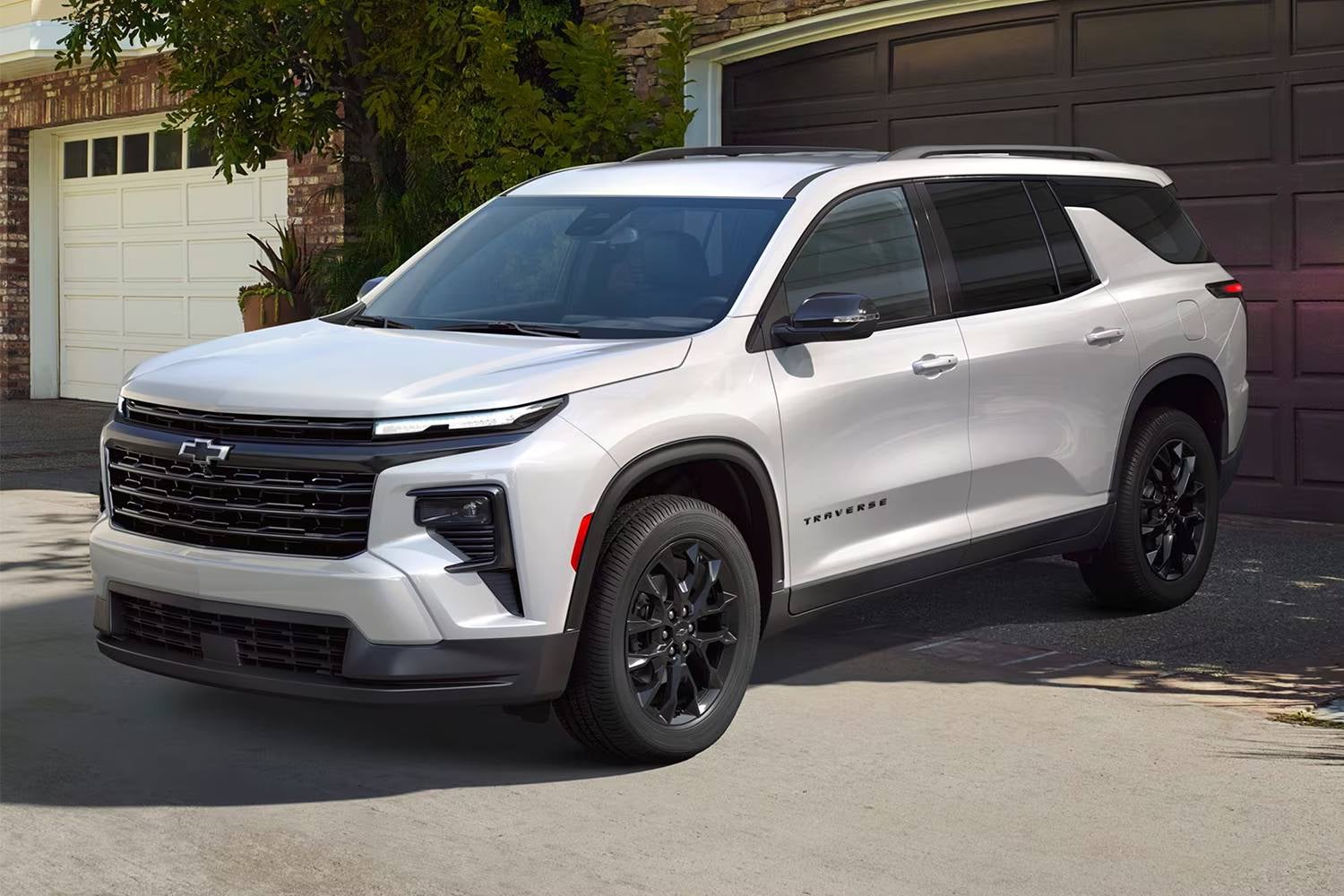
2026-traverse-design-02

If you need third-row seating, Chevrolet gives you three real options: the 2026 Traverse, the 2026 Tahoe, and the 2026 Suburban. All three are genuine 3-row SUVs, but they differ quite a bit in size, seating capacity, and who they actually work for. At Turan-Foley Chevrolet Buick near Gulfport, we help buyers sort through this exact decision every day, so we put this guide together to make it a faster process. Browse our new vehicle inventory to see what's currently in stock, or keep reading to figure out which model actually fits your household.

Quick clarification before we dig in: the Trax, Trailblazer, Equinox, and Blazer don't offer a third row. They're solid vehicles in their own right, but if third-row seating is non-negotiable, those four are out. The Traverse, Tahoe, and Suburban are the only Chevy SUVs with a 3rd row.

Not Every Chevy SUV Has a Third Row - Here's What Does

Each of the three 3-row models approaches the job from a different angle. The Traverse is a midsize unibody SUV built around everyday family practicality. The Tahoe is a full-size body-on-frame SUV that brings more power and a larger overall footprint. The Suburban takes that same full-size construction and stretches it further with an extended wheelbase, giving you the maximum in both passenger and cargo room. Once you understand those structural differences, picking the right one gets a lot simpler.

2026 Chevrolet Traverse: The Midsize 3-Row SUV for Growing Families

The 2026 Traverse is Chevrolet's midsize entry in the 3-row category. It's the most maneuverable of the three, the easiest to park, and the one that fits most naturally into daily suburban life without ever feeling like you're piloting something too large.

Seating Capacity and Who It Fits Best

Seating actually varies by trim. The LT trim offers an available second-row bench that brings total capacity to eight passengers. Most other trims, including the Z71, RS, and High Country, come with second-row captain's chairs and seat seven. That distinction matters: if you consistently need that eighth seat, the LT is the one to focus on.

The Traverse is the natural fit for growing families with younger kids, households where one vehicle handles both school runs and weekend road trips, and drivers who want a 3-row SUV that doesn't demand extra confidence to navigate a crowded parking garage. Wide door openings and a low step-in height are the kind of practical details that seem minor until you're buckling car seats twice a day.

One honest note on the third row: 32.13 inches of legroom works fine for kids and shorter adults, but it's tight for taller adults on long drives. If your third row will regularly carry full-grown passengers on extended trips, the Tahoe or Suburban will serve them considerably better.

Midsize Size, Real-World Space

Cargo is one of the Traverse's strongest suits. Fold everything down and you've got 97.6 cu. ft. of space, which is genuinely impressive for a midsize. Double stroller, a week's worth of groceries, lacrosse gear for three kids, it all fits. Higher trims include power-folding third-row seats, which makes switching from passenger mode to cargo mode quick and painless. For families who are constantly loading and unloading, that feature becomes more useful than it sounds on paper.

2026 Chevrolet Tahoe: Full-Size Flexibility for Active Families

Step inside the Tahoe after spending time in the Traverse and the difference is immediately obvious. The Tahoe is bigger, built on a body-on-frame platform, and designed to handle more in every direction: more passengers, more cargo, more demanding conditions.

Seating Capacity and Who It Fits Best

The 2026 Tahoe can seat up to nine passengers when the LS trim is configured with a front bench. Most other trims seat seven or eight depending on whether the second row has a bench or captain's chairs. That front-bench option is worth knowing about if you're regularly moving a larger group and need every available seat.

The Tahoe is the right call for families with older kids who actually use the third row the way adults do, for households that need real legroom in all three rows, and for drivers who regularly tow a boat, camper, or trailer. Every row has noticeably more breathing room than in the Traverse, and the third row in particular is a meaningfully more comfortable place for adults on longer drives.

If you want to schedule a test drive with the Tahoe and Traverse back-to-back, we can set that up. That kind of direct comparison tends to make the decision pretty clear for most people.

When You Need More Than a Midsize

Families who lead active lives and push their vehicles hard tend to gravitate toward the Tahoe for good reason. It handles demanding terrain, carries full loads without complaint, and the trim selection is broad enough that you can dial in exactly the features you want. For households that genuinely use their SUV hard, the full-size construction is a better long-term fit.

2026 Chevrolet Suburban: Maximum Space for Large Families and Long Hauls

The Suburban is in its own category. It shares the Tahoe's full-size body-on-frame bones but adds an extended wheelbase, which translates directly to more interior length, more third-row space, and more cargo room behind that third row.

Seating Capacity and Who It Fits Best

Like the Tahoe, the 2026 Suburban seats up to nine on the LS trim with a front bench. Most trims seat seven or eight depending on second-row configuration. What sets the Suburban apart is what those passengers actually experience. The extended wheelbase gives third-row occupants noticeably more legroom than either the Traverse or the Tahoe. Adults can sit back there comfortably, which is genuinely rare in the SUV segment.

The Suburban is built for large families with three or more kids, multi-generational households where grandparents and children are riding together regularly, and frequent long-distance travelers who aren't willing to trade passenger comfort for cargo capacity. It's also the right answer for anyone who needs to carry a full vehicle of people and still have meaningful cargo room to work with.

The Case for Going Full-Size Plus

The Suburban's reputation comes from what it lets you do simultaneously. You're not choosing between hauling nine people or hauling gear. You can do both. Road trips, team carpools, beach days on the Mississippi Gulf Coast where everyone shows up with coolers and equipment, the Suburban handles all of it without forcing compromises. For families who've outgrown everything else, it's often the logical endpoint.

Traverse vs. Tahoe vs. Suburban: Side-by-Side at a Glance

The table below uses verified 2026 model year data and puts the key differences right next to each other.

Feature2026 Traverse2026 Tahoe2026 Suburban
Body TypeMidsize unibodyFull-size body-on-frameFull-size extended body-on-frame
Max Seating8 (LT w/ 2nd-row bench); most trims 79 (LS w/ front bench); most trims 7–89 (LS w/ front bench); most trims 7–8
Max Cargo Space97.6 ft³122.7 ft³144.50 ft³
3rd-Row Legroom32.1 in34.9 in36.7 in
Best ForGrowing families, daily versatilityActive families, towing, full-size strengthLarge families, max passenger + cargo capacity
Starting TrimLSLSLS

The Traverse is the approachable, maneuverable choice for families who want a 3-row SUV without the full-size footprint. The Tahoe bridges everyday usability and serious capability in one package. The Suburban extends that further for households that simply need the most room available. All three are legitimate Chevy SUVs with a 3rd row. The right one comes down to how many people you regularly carry, whether adult comfort in the third row matters to you, and how much you demand from an SUV beyond moving passengers from point A to B. You can compare all three in our new vehicle inventory to check current availability and trim options.

Which Chevy 3-Row SUV Is the Right Fit for You?

Start with passenger count and how you actually use the third row. If your family is growing and you need something that handles school pickups, weekend errands, and the occasional road trip without feeling unwieldy, the Traverse is a strong starting point. It's manageable, genuinely capable on cargo, and the most practical fit for families with younger kids who aren't yet filling all three rows with adults.

If your household regularly travels with older kids or adults filling every seat, or if towing is part of your regular routine, the move to full-size is worth making. The Tahoe's third row is meaningfully more comfortable for adult passengers than the Traverse's 32.1 inches allows, and the full-size construction gives the whole vehicle a more confident, capable character.

For large families, frequent long-haul drivers, or anyone who simply refuses to leave people or gear behind, the Suburban answers all of it at once. It's not for everyone, but for the families it's built for, nothing else in the Chevrolet lineup even comes close.

See These 3-Row Chevy SUVs in Person

There's only so much that reading about these vehicles can tell you. Sitting in all three rows, checking how the third row folds, taking a model out on the road: that's usually where the decision actually gets made. We carry the Traverse, Tahoe, and Suburban at Turan-Foley Chevrolet Buick, so you can compare all three in one visit without driving all over the Gulf Coast.

Come see us at 11123 Hwy 49N in Gulfport. We've been serving families across the Mississippi Gulf Coast for over 50 years, and whether you're ready to buy or just starting to narrow things down, we can walk you through trim configurations, seating options, and financing to make the whole process straightforward. Contact us ahead of your visit if you have specific questions or want to confirm availability on a particular model.
Posted in:

Related Posts

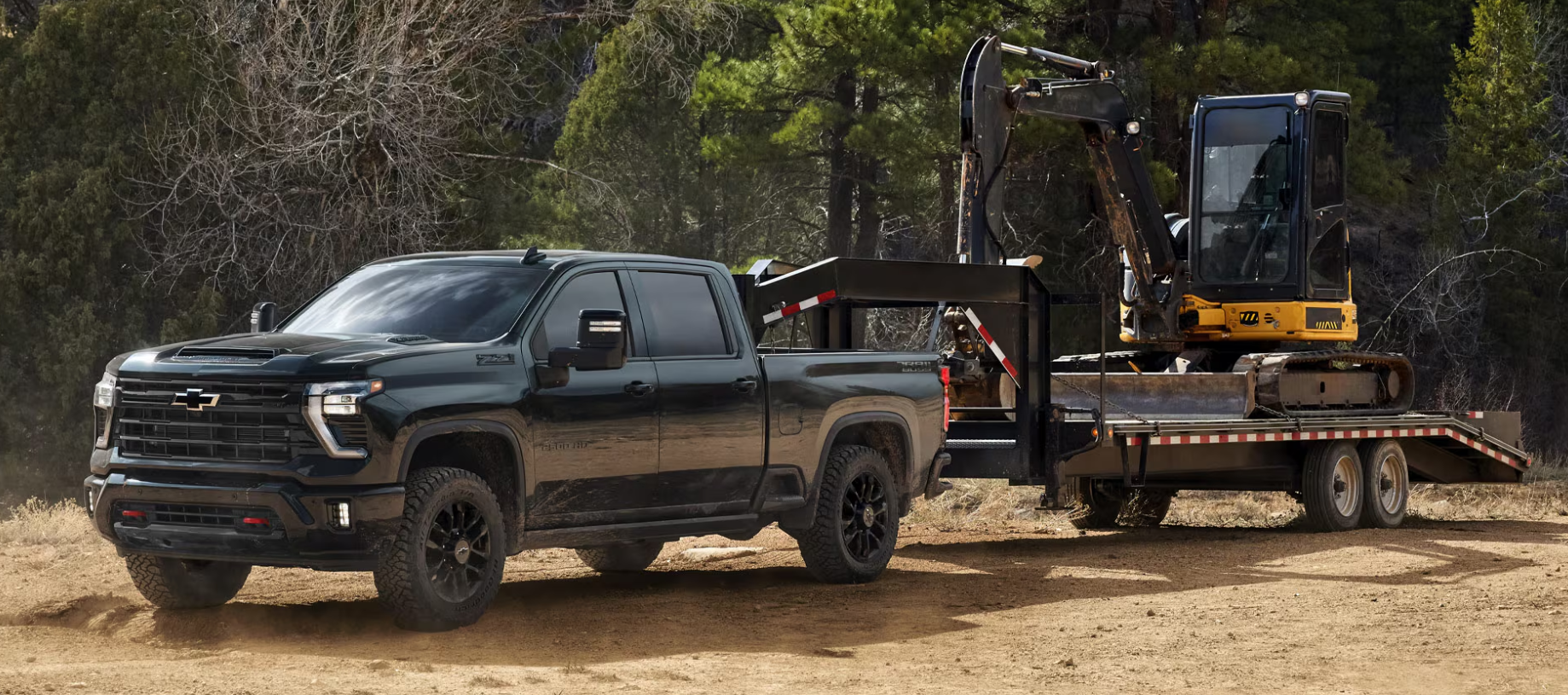
chevy truck towing construction equipment

Do Chevy Trucks Hold Their Value?

Chevy trucks, especially the Silverado 1500, retain value at rates close to the full-size truck average, and the heavy duty Silverado HD holds value better still. They won't win the outright resale crown, but they're a smart, defensible choice for anyone who wants dependable value retention without overpaying at trade-in time. Yes, Chevy trucks hold their value well, though there are a few caveats worth understanding before you buy or trade. Ready to compare trucks in person? You can browse new inventory or check used inventory at Turan-Foley Chevrolet Buick in Gulfport. Do Chevy Trucks Hold Their Value? The Honest Answer Mostly yes, with some fine print. According to iSeeCars, the average new vehicle loses 41.8% of its value over five years, while the average new truck depreciates only 34.2% in that same window. Pickups, along with sports cars, consistently outperform luxury cars and minivans when it comes to holding value, and that category advantage carries over to Chevy specifically. The Silverado 1500 retains 60.7% of its value after five years, per iSeeCars, just shy of the full-size truck average of 61.7%. That's a solid showing even if it's not the top of the leaderboard. Reliability helps the case too. The 2026 J.D. Power Vehicle Dependability Study ranked the Silverado second in the Large Light Duty Pickup segment, behind the Ram 1500 but ahead of the Ford F-150 and GMC Sierra. At the brand level Chevrolet finished ahead of all three, with 178 problems per 100 vehicles against 216 for Ram, 228 for Ford, and 229 for GMC. How Chevy Silverado Resale Value Compares to the Competition Resale numbers only mean something when you stack them against what else is on the lot. Silverado 1500 vs. Toyota, Ford, and Ram Resale Rankings Kelley Blue Book's 2026 Best Resale Value Awards named Toyota the top brand for resale value for the sixth consecutive year, with the Toyota Tacoma leading truck nameplates at roughly 63% retained value after five years and the Toyota brand averaging 53% overall. Chevy isn't the category winner in KBB's rankings this year. That said, the full picture is closer than the brand awards suggest. iSeeCars ranks the Toyota Tundra first among full-size trucks at 78.6% retained after five years, with the Ram 1500 at 62.2%, the Ford F-150 at 62.1%, the GMC Sierra 1500 at 61.8%, and the Silverado 1500 at 60.7% against a category average of 61.7%. That puts four half-tons within two points of each other, which means resale alone is not what separates them. Where Chevy does pull ahead is long-term dependability. In the J.D. Power 2026 U.S. Vehicle Dependability Study, Chevrolet posted 178 problems per 100 vehicles, better than Ram at 216, Ford at 228, and GMC at 229. Why Pickups in General Hold Value Better Than Most Vehicles Trucks hold value because they're useful long after the warranty expires. A truck with a dented tailgate can still haul lumber or tow a boat, so buyers don't discount them as harshly as they would a sedan with cosmetic wear. Towing capacity, bed space, and 4WD availability keep demand steady among contractors, farmers, and weekend haulers alike, which props up resale prices across the board. Resale Value Across the Chevy Truck Lineup Not every Chevy truck depreciates at the same rate. Trim, powertrain, and segment positioning all matter. Chevy Silverado 1500 The Silverado 1500 retains 60.7% of its value at the five-year mark, according to iSeeCars, with depreciation climbing from 28.2% at three years to 49.8% at seven years and 62.2% at ten years. It's offered across nine trims: WT, Custom, LT, RST, LT Trail Boss, Custom Trail Boss, LTZ, ZR2, and High Country, with towing capacity reaching 13,300 lbs when equipped with the 3.0L Duramax turbo-diesel. Chevy Silverado HD The Silverado HD is where Chevy's resale story gets stronger. The 2500HD retains about 74% of its value after five years per iSeeCars, roughly 13 percentage points better than the Silverado 1500's 60.7%. Heavy-duty trucks hold value better as a class, with a segment average of 77%. The Duramax 6.6L Turbo-Diesel V8 produces 470 hp and 975 lb-ft of torque paired with the 10-speed Allison transmission, and Crew Cab 2500HD models tow up to 22,070 lbs. Step up to a 3500HD dually with the Duramax and towing clears 30,000 lbs. Chevy Colorado The Colorado holds up relatively well too, retaining 62.1% of its value after five years. Its depreciation rate runs faster than the midsize category average (37.9% versus 29.6%), yet its resale percentage still lands above the Silverado 1500's. Six trims are available: WT, Custom, LT, Trail Boss, Z71, and the off-road-ready ZR2, all powered by the 2.7L TurboMax four-cylinder making 310 hp and 430 lb-ft of torque. Model Powertrain Max Towing Trim Range Est. 5-Year Resale % Silverado 1500 EcoTec3 V8 / 3.0L Duramax 13,300 lbs WT to High Country 60.7% Silverado HD (2500HD) 6.6L Duramax Turbo-Diesel V8 22,070 lbs (up to 30,000+ dually) WT to High Country 68% Colorado 2.7L Turbo 4-cyl 7,700 lbs WT to ZR2 62.1% Key Factors That Affect Your Chevy Truck's Resale Value Resale value isn't fixed. It moves based on specific, controllable factors. Mileage, Condition, and Maintenance Records Kelley Blue Book points to make, model, age, mileage, and overall condition at the time of trade as the primary drivers of depreciation, along with maintenance and accident history. A truck with documented maintenance and lower mileage will always outperform an otherwise identical model without that history. 4WD, Engine Choice, and Towing Packages Four-wheel drive and towing equipment add resale value, and 4WD stays in high demand among commercial, rural, and off-road buyers specifically. Silverado is offered in 2WD and 4WD with no all-wheel-drive option, so 4WD is the box that matters here. If you're deciding between trims now, options like the Max Trailering Package can pay off later. Cab and Bed Configuration Payload varies meaningfully by cab style, and lighter configurations carry more. Chevrolet rates the 2026 Silverado 1500 at up to 2,260 lbs of max available payload, reached with the TurboMax engine in a Regular Cab Long Bed 2WD build. Crew Cab and 4WD trucks come in lower because the truck itself weighs more. The Durabed includes 12 standard tie-downs rated at 500 lbs per corner, a detail work-truck buyers notice and value. Gulf Coast Demand for Work and Personal-Use Trucks Here on the Mississippi Gulf Coast, local conditions shape resale value in ways national averages don't always capture. A few things to keep in mind if you're in Gulfport, Biloxi, Ocean Springs, D'Iberville, or nearby communities: Humidity and coastal salt exposure increase corrosion risk, so undercarriage condition matters more here than in drier climates. Towing and hauling demand stays high locally, driven by boat owners and trailer users along the coast. Personal-use and work-truck demand both remain strong, keeping resale prices for well-maintained trucks competitive in the Gulfport market. Nationally, the personal-use segment of the pickup market is expected to dominate with a 61% share and a 2% compound annual growth rate from 2026 through 2035, according to Global Market Insights, pointing to steady demand for trucks like the Silverado for years to come. Curious about financing before you commit? You can check pre-approval options with our team. Tips to Maximize Your Chevy Truck's Value at Trade-In A few practical habits go a long way toward protecting your truck's value, whether it's a Silverado 1500, Silverado HD, or Colorado. Keep a digital service log rather than relying on paper receipts that can get lost. Choose neutral exterior colors when you buy, since they tend to attract more buyers at resale. Avoid non-reversible lift kits or bed modifications, which can shrink your buyer pool. Address minor repairs before you trade in rather than letting them accumulate, and always detail the truck thoroughly before an appraisal. These small steps often make a bigger difference than owners expect. Timing matters too. Depreciation is front-loaded in the first five years of ownership, so trading in earlier typically captures more retained value. It's also worth considering a trade ahead of a major model redesign, since outgoing generations can lose value faster once a new one arrives, or during periods of high local seasonal demand when buyers are actively searching. New vs. Used Chevy Trucks: Which Retains More Value New trucks lose value fastest in their first couple of years, which is exactly why used-truck demand keeps growing. Buying a truck that's already two years old lets you skip the steepest part of the depreciation curve. Certified Pre-Owned programs have made this an easier decision too, since franchised dealers now offer warrantied CPO vehicles that add a layer of trust buyers didn't always have in the used market. A well-maintained used Silverado can be one of the best value options available if you're weighing long-term resale against upfront cost. Get a Free Trade-In Value Estimate at Turan-Foley Chevrolet Why Get an Estimate We offer free trade-in value estimates at Turan-Foley Chevrolet Buick in Gulfport, so you don't have to guess what your Chevrolet is worth right now. Our team looks at your truck's mileage, condition, trim, and local market demand to give you a clear, honest number. Start the Process You can get your trade-in value online in a few minutes, or contact us directly if you have questions about your specific model. As a family-owned dealership serving Gulfport and the surrounding Gulf Coast for more than 50 years, we treat every trade-in conversation the way we'd want our own family treated: straightforward, no pressure, no runaround. Frequently Asked Questions About Chevy Truck Resale Value Does Chevy or Toyota have better resale value? Toyota currently holds the resale crown according to Kelley Blue Book, with the Tacoma leading all 2026 nameplates. That said, the Silverado 1500 sits within a point of the full-size segment average per iSeeCars, and Chevrolet outscored Toyota's domestic rivals on brand dependability in the J.D. Power 2026 study. How does the Silverado 1500 compare to the full-size truck category average? The Silverado 1500 retains 60.7% of its value after five years, just under the full-size average of 61.7%, according to iSeeCars. It's nearly on par with the segment as a whole. Is the Silverado HD a better resale investment than the 1500? Yes, by a notable margin. The Silverado 2500HD retains about 74% of its value after five years compared to roughly 60.7% for the 1500, a difference of more than 13 percentage points. What hurts truck resale value the most? High mileage, poor condition, incomplete service history, non-reversible modifications, and low reliability or desirability all drag down resale value, according to Kelley Blue Book's depreciation factors.

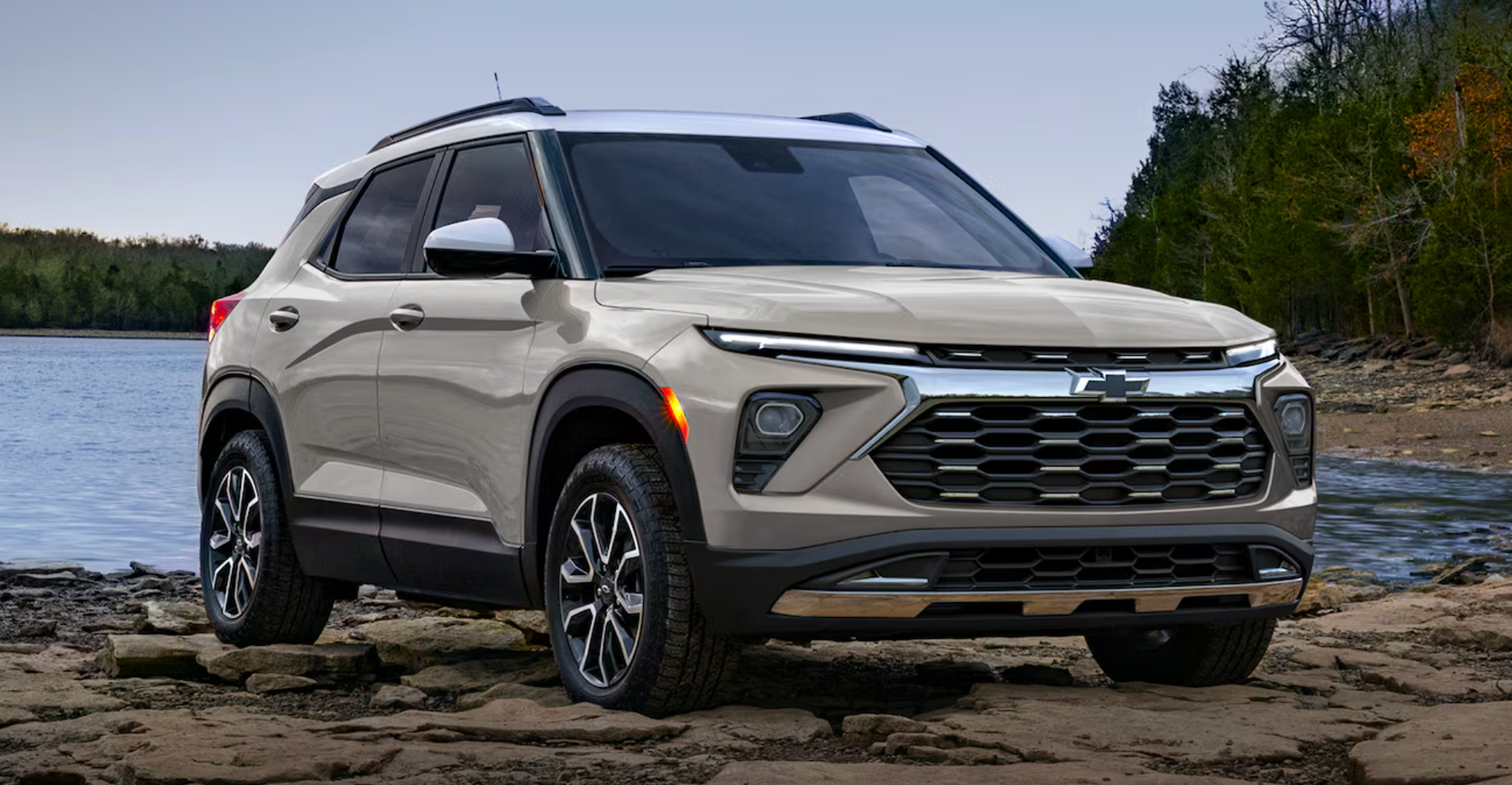
2026 Chevrolet Trailblazer parked in front of water

Chevy SUVs by Size: Smallest to Largest

Picking a Chevy SUV sounds simple until you realize just how many options are on the table. The Chevrolet SUV lineup runs from a city-friendly compact all the way up to a full-size hauler that seats up to nine passengers. If you're trying to figure out which model actually fits your life, starting with size is the smartest move. We've ranked the full 2026 gas SUV lineup in order of overall length to help you shop smarter before your visit to Turan-Foley Chevrolet Buick in Gulfport. How Chevrolet Sizes Its 2026 SUV Lineup The 2026 Chevrolet SUV lineup covers seven distinct body sizes, with total lengths running from 174.0 inches up to 226.3 inches. That's more than four feet of difference between the two ends of the lineup, which tells you a lot about how seriously Chevy approaches variety. Whether you need something that slides into a tight downtown Gulfport parking garage or a vehicle that can carry the whole team plus gear for a Gulf Coast road trip, there's a model built for exactly that. Worth knowing before you start shopping: the Trailblazer is actually shorter than the Trax, despite the Trax often being positioned as the entry-level option. At 174.0 inches versus the Trax's 178.6 inches, the gap is modest, but it does change how you think about the two vehicles. Knowing where each model falls helps you shop with real confidence. The Smallest Options: Trailblazer and Trax Chevy's two smallest SUVs share a lot of DNA but serve slightly different buyers. Both prioritize everyday practicality and won't intimidate you in a crowded parking lot. The difference comes down to interior packaging, personality, and how you plan to use the vehicle day to day. Chevy Trailblazer (174.0 in.): Best for City Living The Trailblazer is the shortest gas SUV in the current lineup. At 174.0 inches long, it's the easiest to park, the most comfortable in stop-and-go traffic, and still feels spacious enough inside for daily errands and weekend trips. With up to 54.4 cu ft of cargo space with the rear seats folded, it doesn't sacrifice function to stay compact. If you're commuting solo or with one passenger most of the time, the Trailblazer hits a sweet spot between footprint and function that's hard to beat. Chevy Trax (178.6 in.): Small Footprint, Big Interior Efficiency The Trax sits 4.6 inches longer than the Trailblazer and is Chevy's most affordable SUV. Chevy engineers put that extra room to good use inside the cabin, and the Trax feels roomier than its exterior dimensions suggest, with thoughtful storage and a seating layout that works well for small families. With up to 54.1 cu ft of cargo space, it delivers strong practicality per square inch. For first-time SUV buyers or anyone stepping up from a compact sedan, the Trax offers an accessible entry into the Chevrolet SUV lineup without a steep learning curve. The Middle Ground: Equinox and Blazer Once you move into midsize SUV territory, cargo capacity becomes more meaningful and the overall experience shifts toward comfort and capability. The Equinox and Blazer both occupy this space but serve noticeably different audiences. Chevy Equinox (183.2 in.): The Practical Family Compact At 183.2 inches, the Equinox is a five-passenger, two-row SUV that delivers midsize-level livability in a manageable package. It's Chevrolet's most popular SUV for good reason. With up to 63.5 cu ft of max cargo, it balances rear passenger space, cargo room, and driver technology in a way that handles school runs, grocery hauls, and weekend road trips without being a burden to park. It's the kind of vehicle that earns loyalty because it handles daily life exceptionally well. Chevy Blazer (191.8 in.): A Sporty Two-Row Option With a Time Stamp The Blazer stretches to 191.8 inches and brings a distinctly sportier personality to the midsize segment. Where the Equinox leans practical, the Blazer leans bold, with a wider stance, angular styling, and a performance-tuned suspension aimed at drivers who want their SUV to feel like an event. It offers up to 64.2 cu ft of cargo space with the rear seats folded, and its two-row layout keeps the profile sleek, though growing families who need a third row should look at the Traverse instead. One timely note: the 2026 gas Blazer is confirmed in production, but GM is not expected to continue it past MY2026. If the Blazer's style and size speak to you, now is the time to schedule a test drive before availability narrows. Going Full-Size: Traverse, Tahoe, and Suburban Chevrolet's full-size SUVs represent a different category of capability altogether. The Traverse, Tahoe, and Suburban are engineered for maximum passenger count, serious towing, and the kind of cargo space that eliminates compromise. Each has a distinct role. Chevy Traverse (204.4 in.): The Three-Row Sweet Spot At 204.4 inches, the Traverse is the most accessible entry point into Chevy's full-size SUV options. Built on a car-based platform rather than a truck frame, it delivers a smooth, crossover-like driving experience with room for seven or eight passengers and up to 97.6 cu ft of max cargo. The third row is genuinely usable for adults on shorter trips, and the overall capacity easily handles family vacations without a rooftop carrier. For families who've outgrown the Equinox but don't need a truck-based platform, the Traverse hits a real sweet spot. Chevy Tahoe (211.3 in.): Truck-Based Muscle for Big Families The Tahoe is where the Chevrolet SUV lineup transitions to truck-based construction. At 211.3 inches, it's built on the same platform as the Silverado, which means the chassis handles real loads with authority. It seats seven to nine passengers and offers up to 122.7 cu ft of max cargo. For families who haul boats, trailers, or campers along the Gulf Coast, the Tahoe opens up towing capabilities a crossover simply can't match, while still working comfortably as a daily driver. Chevy Suburban (226.3 in.): Maximum Space, No Compromises The Suburban measures 226.3 inches from bumper to bumper, making it the largest Chevy SUV in the lineup. It shares its truck-based architecture with the Tahoe but adds a longer wheelbase that dramatically increases both rear passenger space and cargo capacity. With up to 144.7 cu ft of max cargo and seating for seven to nine passengers, the Suburban simply eliminates compromise. Families with a lot of people, a lot of gear, or both will find nothing else in this lineup comes close. A Quick Note for EV Shoppers: Equinox EV and Blazer EV For buyers interested in going electric, Chevrolet also offers the Equinox EV and Blazer EV. Both carry over the familiar footprints and interior layouts of their gas-powered counterparts, so you won't be sizing up or down to go electric. If you're weighing EV options within the 2026 Chevrolet SUV lineup, contact our team and we can walk you through both models alongside their gas counterparts. Matching Chevy SUV Size to Your Lifestyle The right Chevy SUV size comes down to your daily reality. Use the table below to see where each model lands based on the most common use cases: Lifestyle Need Recommended Model Overall Length Key Feature City Driving Trailblazer 174.0 in. Easiest to park; up to 54.4 cu ft cargo Small Families Trax 178.6 in. Most affordable; up to 54.1 cu ft cargo Growing Families Equinox 183.2 in. 5-passenger two-row; up to 63.5 cu ft cargo Sporty Style Blazer 191.8 in. Two-row; up to 64.2 cu ft cargo Three-Row Space Traverse 204.4 in. 7–8 passengers; up to 97.6 cu ft cargo Towing & Power Tahoe 211.3 in. Truck-based; 7–9 passengers; up to 122.7 cu ft cargo Maximum Cargo Suburban 226.3 in. Largest in lineup; up to 144.7 cu ft cargo This table covers the full 2026 gas lineup so you can see at a glance where each model lands before you ever step on the lot. Come See the Full 2026 Chevy SUV Lineup at Turan-Foley Chevrolet in Gulfport Reading about dimensions only gets you so far. The real test is sitting in the driver's seat, loading your family into the back, and actually feeling the difference between a 174-inch Trailblazer and a 226-inch Suburban. At Turan-Foley Chevrolet Buick in Gulfport, we carry the full range of 2026 Chevy SUV models and have been helping Mississippi Gulf Coast families find the right vehicle for over 50 years. Our team can walk you through every option by size in person, whether you're after something city-sized or a full-size hauler for a household that keeps growing. Stop by at 11123 Hwy 49N, Gulfport, MS 39503, and find out firsthand which Chevy SUV fits your life best.

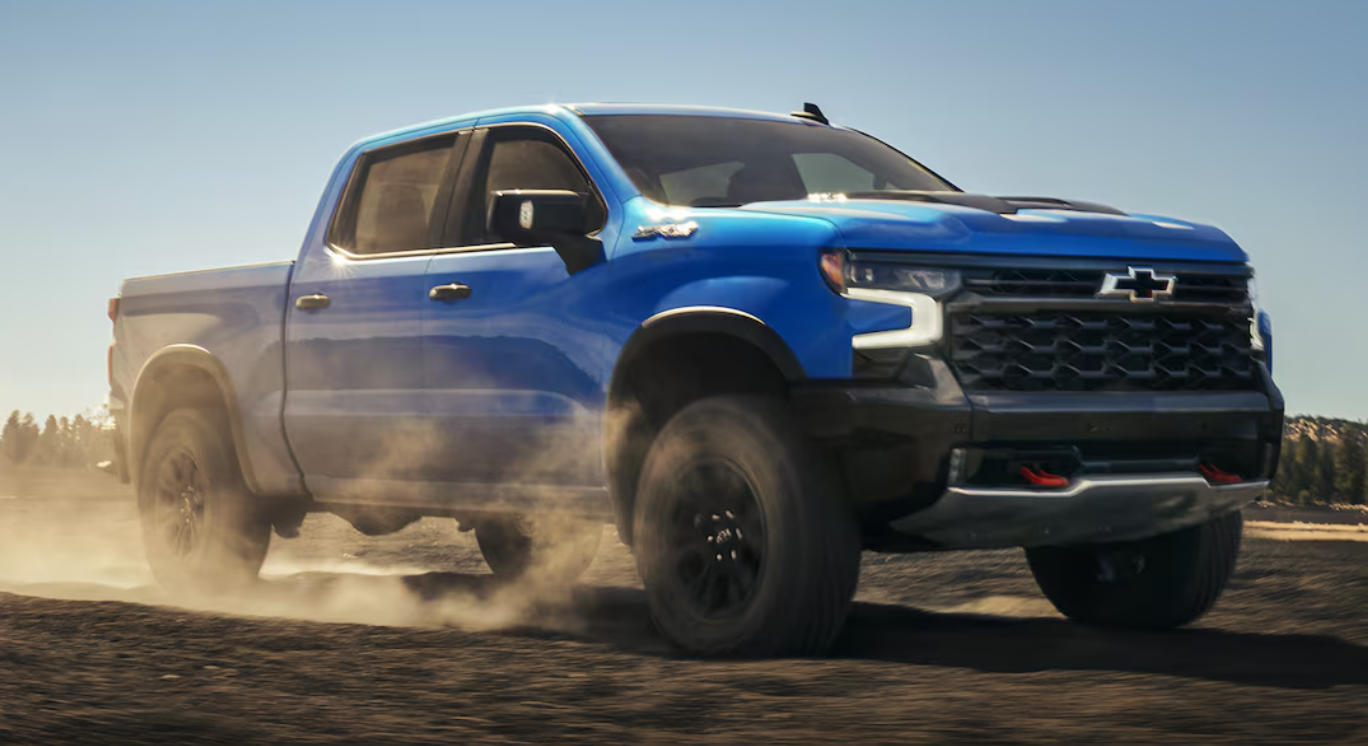
2026 Silverado in blue

What is Chevy's TurboMax Engine?

Chevrolet has been quietly rewriting the rulebook on what a truck engine should look like. The Chevy TurboMax sits at the center of that story: a turbocharged four-cylinder that punches well above its weight and is now standard equipment across some of Chevy's most popular truck models. If you're curious about the buzz surrounding it, this is a straightforward look at what it is, what it can do, and whether it makes sense for your next truck. You can browse our current TurboMax-equipped inventory to see what's available right now at Turan-Foley Chevrolet. What Is the Chevy TurboMax Engine? The TurboMax is a turbocharged 2.7L inline-four built specifically for truck duty. Based on the L3B engine platform, it was officially branded "TurboMax" starting with the 2024 model year. Chevrolet engineered it with direct injection and variable valve timing, but what makes it unusual for a four-cylinder is its construction. The TurboMax uses a fully forged bottom end and a strengthened block, the kind of diesel-like internals that give it durability well beyond what you'd expect from a passenger-car engine. It was built from the start to handle the demands of truck ownership. The TurboMax also reflects a broader shift happening across the truck segment. Buyers want capable powertrains that don't drain the tank on every commute. This engine answers that call by pairing modern forced-induction technology with a lighter, more compact architecture than a traditional V8. Power and Torque: The Numbers Shoppers Actually Care About Raw specs tell a real story here. The TurboMax produces 310 hp and 430 lb.-ft. of torque, with that torque peaking at 3,000 rpm. Those aren't midsize-car numbers. It delivers more horsepower than Chevrolet's 3.6L V6 and more torque than any V6 option in the Silverado 1500 lineup, making it the highest-torque engine in that lineup. What makes those numbers especially useful is how they're delivered. Turbocharged engines generate peak torque much earlier in the RPM range than naturally aspirated engines, which means you feel the power the moment you press the accelerator. That characteristic makes real-world driving feel strong and confident whether you're merging onto the highway, pulling out of a job site, or working through Gulf Coast traffic with a loaded bed. Why the Low-End Torque Is the Real Story The TurboMax's strong low-RPM output isn't accidental. Three engineering decisions work together to produce it. Turbocharging forces more air into the combustion chamber, increasing power output without adding displacement. Active Fuel Management (cylinder deactivation) allows the engine to drop to two cylinders under light loads, improving efficiency without sacrificing response when you need it. And the forged internals, borrowing the same construction philosophy from diesel engines, allow the block to handle sustained high-torque output without the wear you'd eventually see in a more lightly built engine. These features explain why the TurboMax feels more like a V8 off the line than a four-cylinder. Why TurboMax Torque Makes Sense for Hauling, Towing, and Work-Truck Duty Torque is the metric that actually moves things. Horsepower gets the headlines, but torque is what pulls a loaded trailer off a dead stop and keeps a work truck from straining on an incline. The TurboMax's 430 lb.-ft. arrives early and holds strong, which is exactly what you want in a working vehicle. In the 2026 Silverado 1500, Chevrolet rates the TurboMax at a maximum towing capacity of up to 9,500 lbs. and a maximum payload of up to 2,260 lbs. (figures vary by cab style, drivetrain, and payload package). That puts it well within range for legitimate work-truck duty, whether you're hauling equipment, towing a boat, or managing job-site loads without stepping up to a larger V8. The engine's low-RPM grunt means less stress on the drivetrain and smoother starts when you're fully loaded. For anyone who uses their truck as a tool rather than just transportation, the TurboMax holds its own in everyday work scenarios along the Gulf Coast and beyond. The 2026 Chevy Silverado 1500 and the TurboMax Engine For 2026, Chevrolet continues a significant call: the TurboMax is the standard powertrain across the core Silverado 1500 trims. That decision means buyers get a genuinely capable engine right from the base configuration rather than treating a four-cylinder as a compromise spec only budget shoppers would consider. Which Silverado 1500 Trims Come Standard with TurboMax? The TurboMax spans a wide range of the Silverado lineup. Standard-equipped trims include the Work Truck (WT), Custom, Custom Trail Boss, LT, RST, and LT Trail Boss. That's broad coverage. You get the same modern, high-output engine regardless of which trim you choose. New for 2026 is the RST Select package, offered exclusively with the TurboMax, which adds 20-inch black wheels, all-terrain tires, assist steps, a bedliner, and all-weather floor mats. Fuel economy for the 2026 Silverado 1500 with the TurboMax is EPA-estimated at 20 city / 23 highway / 21 combined MPG for 2WD, and 18 city / 21 highway / 19 combined MPG for 4WD. Those numbers are worth factoring into your total cost of ownership, especially for buyers who put real miles on their trucks. If your priorities are daily commuting with the ability to tow on weekends, the LT or RST gives you that balance. If you need a capable work truck that can take you off-road without breaking a sweat, the Custom Trail Boss or LT Trail Boss adds suspension lift, skid plates, and all-terrain tires, all with the same 310 hp / 430 lb.-ft. TurboMax underneath. You can schedule a test drive to feel the difference between configurations firsthand. The 2026 Chevy Colorado and the TurboMax Engine The Colorado and TurboMax pairing is equally worth noting. For the 2026 model year, the TurboMax is the only powertrain option across all Colorado trims, which says a lot about Chevrolet's confidence in it. There's no V6 alternative available. The same output figures apply: 310 hp and 430 lb.-ft. of torque. Maximum towing for the 2026 Colorado with TurboMax reaches up to 7,700 lbs. when properly equipped with the Advanced Trailering Package. The Colorado is built for versatility. It's easy to handle in the city, capable enough for weekend off-roading or camping hauls, and well-suited for drivers who want a truck without the footprint of a full-size. The TurboMax's torque profile and efficiency fit that mission well. For Gulfport drivers who want something maneuverable enough for everyday errands but capable enough for a boat launch on the weekend, the Colorado is a natural fit. A Four-Cylinder Truck Engine That Doesn't Ask You to Compromise A four-cylinder Chevy truck once carried the stigma of being underpowered, a base spec for buyers who had no other option. The TurboMax changes that picture entirely. With 430 lb.-ft. of torque on tap and direct injection keeping combustion clean and efficient, the TurboMax doesn't ask you to make sacrifices. Chevrolet backs this up with direct comparisons: the TurboMax makes more horsepower than the 3.6L V6 and more torque than any V6 in the Silverado 1500 lineup. Cylinder count tells you very little about how an engine actually performs on the road or at the job site. The forged internals and strengthened block also speak to long-term durability. Active Fuel Management keeps efficiency up during light-load driving, so you're not burning fuel unnecessarily on the highway. For a contractor running jobs out of Gulfport, or someone who just wants a capable daily driver with a real tow rating, the TurboMax meets every reasonable demand you'd put on a truck. Get Behind the Wheel at Turan-Foley Chevrolet Buick Reading specs is one thing. Getting behind the wheel is another. Come compare a 2026 Silverado 1500 or Colorado with TurboMax at Turan-Foley Chevrolet Buick, where we've been serving the Mississippi Gulf Coast for over 50 years. We carry a well-stocked selection of both models across a range of trims, and our team is here to help you find the right configuration for your needs, whether that's a no-frills Work Truck or a fully loaded LT Trail Boss. Stop by at 11123 Hwy 49N, Gulfport, MS 39503, or reach out to us online to get started. We'd love to put you in the driver's seat of a TurboMax-powered truck and let the engine speak for itself.