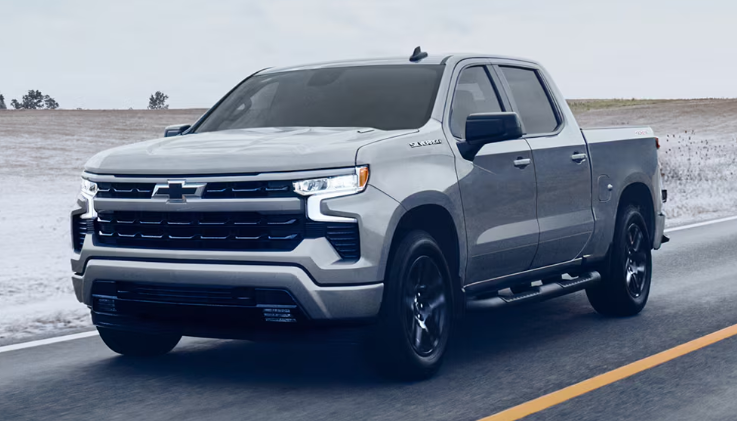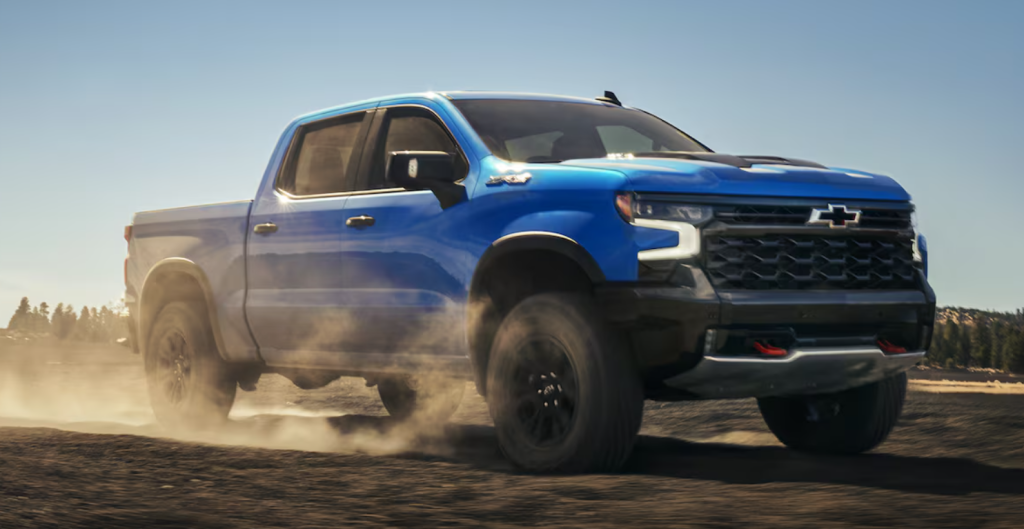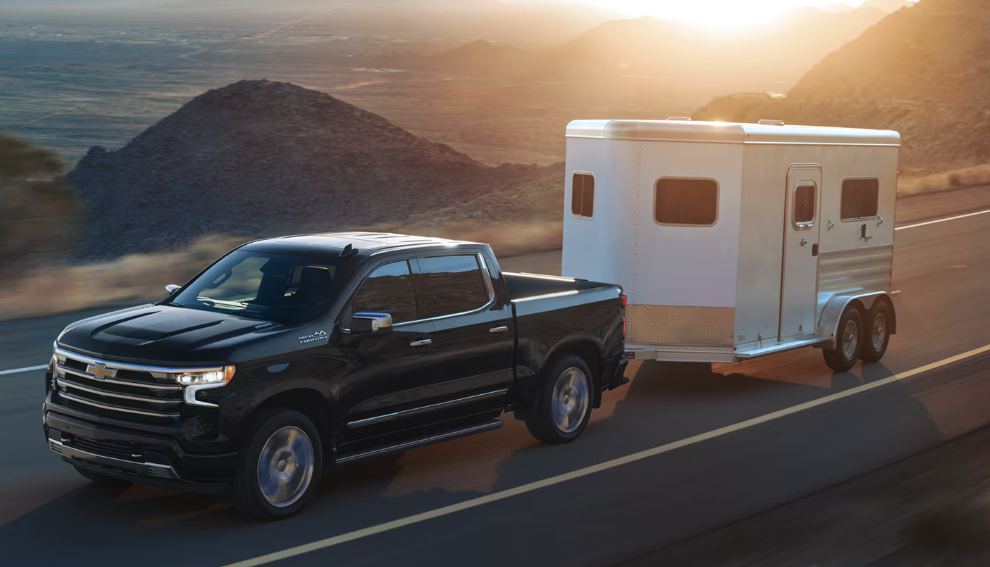





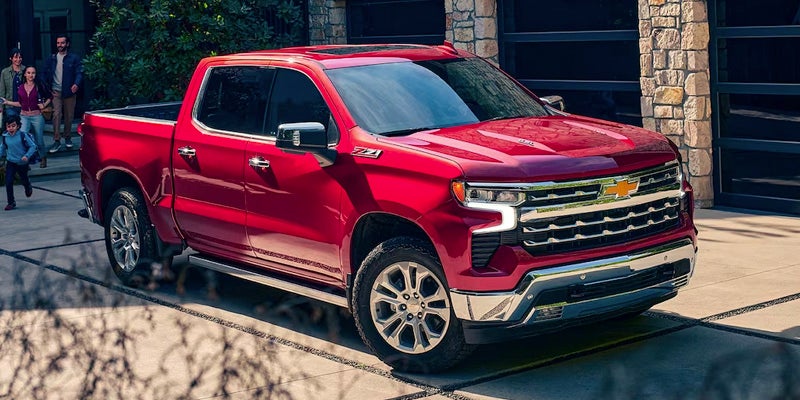
If you're planning weekend trips to the Gulf Coast or longer hauls out of state, you want a straight answer before you shop. A Chevy Silverado 1500 can pull a camper, and depending on how it's built, it can pull a big one. The catch is that "Silverado 1500" isn't one truck with one number. It's a lineup of engines, cabs, beds, and drivetrains, each with its own towing math. Before you commit to a camper, browse available Silverado 1500 trucks or schedule a test drive so you can see how a specific configuration feels with real cargo in the bed.
What Size Camper Can a Silverado 1500 Actually Handle?
A base engine with no towing equipment handles a small pop-up fine. Add the right engine, drivetrain, and towing package, and the same truck can handle a fifth wheel that would overwhelm a lesser setup. Matching camper size to your Silverado 1500 comes down to lining up your actual trailer weight with the truck sitting in your driveway, not the biggest number printed on a window sticker.
2026 Silverado 1500 Max Towing: Up to 13,300 Lbs When Properly Equipped
Every 2026 Silverado 1500 tows at least 8,700 lbs, with an available maximum of 13,300 lbs, according to Chevrolet. That top figure is real, but it belongs to one specific build, not the lineup as a whole. Silverado 1500 diesel towing capacity and Silverado 1500 V8 towing capacity numbers move around quite a bit depending on how the truck is optioned, so treat any single "2026 Silverado towing capacity chart" you see online as a starting point for research. Your particular truck's number could look very different.
The Rating Explained: Double Cab, 2WD, Duramax 3.0L I-6 Diesel, Max Trailering Package, 20-Inch Wheels
The 13,300-lb figure is tied to a Double Cab, Standard Bed model with the 3.0L I-6 Duramax engine, 2WD, the NHT RPO code (which is the Max Trailering Package), and 20-inch wheels. Swap the cab for a Crew Cab Short Bed with the same engine and package, and the max towing capacity drops slightly to around 13,200 lbs. Skip the Max Trailering Package entirely, and most configurations land closer to 9,000 to 9,700 lbs, which is a meaningful gap if you're shopping for a heavier trailer.
Why Engine, Cab, Bed, and Drivetrain All Change Your Number
Every piece of the truck's build plays a role in its final towing capacity. A longer cab adds weight the truck has to carry, a 4WD system distributes power differently than 2WD, and the engine determines how much torque is available to get a loaded trailer moving and stopped. Here's how the engines compare on Chevrolet's published ratings:
Each figure is a maximum for a properly equipped truck, so the drivetrain, cab, bed, and trailering package on your build all move it. Payload is a separate limit and shifts more than towing does across configurations, so confirm it against the door-jamb label for your exact truck.
Dry Weight vs. Loaded Weight: Why Camper Shopping by Brochure Numbers Fails
Camper brochures love to advertise "dry weight," also called UVW, which is the weight of the trailer as it left the factory. That number excludes cargo, fresh water, propane, passengers, and any dealer-installed options. A camper listed at 5,000 lbs dry can easily weigh 6,500 lbs or more once it's loaded for a trip to Ship Island or a weekend at a Gulf Coast state park. The number you actually need to compare against your truck's rating is the trailer's GVWR, since it accounts for everything the trailer can carry when fully loaded, unlike the dry weight printed on the spec sheet.
Tongue Weight and Its Impact on What You Can Actually Tow
Tongue weight is the downward force the trailer puts on your hitch, and it matters more than most buyers realize. For a conventional trailer, tongue weight typically runs 10 to 15 percent of the loaded trailer weight, while gooseneck and fifth-wheel kingpin weight runs higher, around 15 to 25 percent. Too little tongue weight causes sway on the highway; too much overloads the rear axle. Tongue weight limits for the Silverado 1500 are listed on the door-jamb sticker, and staying within them keeps handling predictable, even on windy Gulf Coast bridges.
Payload, Passengers, and Cargo: The Overlooked Towing Limiters
Towing capacity gets all the attention, but payload capacity limits you just as much. It has to cover passengers, cargo, and tongue weight together. Say your truck's payload is rated at 2,000 lbs and your loaded trailer's tongue weight is 800 lbs. That leaves only 1,200 lbs for passengers and whatever else is riding in the cab or bed. Run out of payload before you run out of towing capacity, and you're still overloaded. If this math is getting confusing for your specific setup, contact our team for personalized towing advice and we'll walk through it with you.
Why You Should Check Your Exact Truck's Rating, Not Just the Max Advertised Number
The 13,300-lb figure gets all the headlines, but it applies to one specific build. Your truck's actual number could be several thousand pounds lower depending on engine, cab, and options, so verify your specific rating before you buy a camper.
Reading the Door-Jamb Sticker and Trailering Guide
The Trailering Information Label on the driver-side door jamb has the real numbers for your truck. That label lists GVWR, GCWR, rear axle weight rating, max payload, max tongue weight, and curb weight for your exact truck, not a generic average. For total certainty before a long trip, weigh the truck-and-trailer combination fully loaded at a public scale.
GVWR, GCWR, and Payload vs. Towing Capacity
GVWR is the maximum the truck is allowed to weigh once it's loaded, counting the truck itself plus passengers, cargo, and fluids. GCWR is a different number entirely: it covers the combined weight of the loaded truck and the trailer together. Payload is simply GVWR minus curb weight. None of these three should get ignored in favor of the single towing figure printed on a brochure.
Matching Your Camper to the Right Silverado 1500 Setup
Once you know your truck's real numbers, matching a camper becomes a lot more straightforward. Pick a trailer that fits comfortably within your truck's rating instead of one that pushes it to the edge.
Travel Trailers, Pop-Ups, and Fifth Wheels: Weight Ranges to Expect
Travel trailers under 25 feet typically run 3,000 to 6,000 lbs dry with a GVWR around 5,000 to 8,500 lbs, which fits most half-ton trucks comfortably. Trailers between 26 and 35 feet often weigh 6,000 to 10,000 lbs dry with a GVWR up to 14,000 lbs, and may push a half-ton to its limits. Pop-ups are lighter, usually 1,400 to 3,500 lbs dry. Fifth wheels vary widely: unloaded weights commonly fall between 5,000 and 16,000 lbs, and some manufacturers list averages closer to 13,000 lbs empty with an 18,000-lb average GVWR. A three-quarter-ton or one-ton truck is the realistic minimum for most fifth-wheel setups.
The 80% Rule: Towing Below Max for Safety and Control
A lot of experienced towers stick to 80 percent of a truck's rated towing capacity as a practical ceiling. If your Silverado is rated at 11,300 lbs, that works out to roughly 9,040 lbs (11,300 × 0.8 ≈ 9,040 lbs). This isn't a legal requirement or a Chevrolet mandate, just a margin that makes towing noticeably less stressful when you factor in sway, braking, and axle stress.
Equipment That Makes Camper Towing Safer
The right hitch and safety equipment matter just as much as the truck's rating.
Hitch Type and Weight-Distribution Systems
Hitch requirements for the Silverado 1500 depend on trailer weight, but as a general rule, any trailer over 3,500 lbs benefits from a weight-distributing hitch. These hitches spread the trailer's weight more evenly across both axles, improving handling and reducing sway compared to a standard ball hitch.
Trailer Brakes, Wiring, and Sway Control
Trailers with electric brakes need a compatible brake controller, and the available Max Trailering Package includes one built in, along with a higher-capacity rear axle and heavy-duty cooling and shocks. Chevrolet's Trailer Sway Control helps manage unexpected trailer movement, while the Trailering App offers pre-departure checklists and trailer light tests before you leave home. Available camera systems, including up to 14 views, Transparent Trailer view, and Hitch Guidance, are offered on trims like LT, RST, LT Trail Boss, LTZ, and High Country, and make hitching up and backing a trailer noticeably easier.
Before any trip, run through a quick checklist covering tire pressure on both truck and trailer, the hitch and safety chains, the brake controller, and your mirror and camera views. It takes a few minutes and catches most problems before they start.
Choosing the Right Silverado 1500 Configuration for Your Camper
Start with the camper you actually plan to tow, then build the truck spec around it. That order saves headaches down the road.
Best Setups for Lighter Campers and Travel Trailers
For pop-ups and smaller travel trailers, the 2.7L TurboMax, rated up to 9,500 lbs towing, is often enough, and it also tends to carry the highest payload since it's a lighter engine with less curb weight. The 5.3L V8, rated up to 11,300 lbs, covers most mid-size travel trailers with room to spare under the 80% rule.
Best Setups for Heavy Fifth Wheels and Large Trailers
For heavy travel trailers and enclosed trailers, the 6.2L V8 or the Duramax 3.0L I-6 diesel, both rated in the 13,000-plus range, provide the torque and stability needed. Fifth wheels are a different conversation: Chevrolet's gooseneck and fifth-wheel ratings for the Silverado 1500 top out around 10,300 lbs on select 5.3L V8 configurations, well below the conventional-hitch maximums above. If a fifth wheel is in your future, look at the 2500HD. Either way, match the truck to your heaviest regular load rather than the trailer you'll only tow occasionally.
Compare Silverado 1500 Towing Setups at Turan-Foley Chevrolet Buick
We've served Gulfport, Biloxi, Long Beach, Bay St. Louis, Pascagoula, Ocean Springs, D'Iberville, and the surrounding Gulf Coast communities for over 50 years, and towing questions come up often, especially from folks planning trips to nearby camping spots. Our team can walk you through GVWR, payload, and tongue weight for any Silverado 1500 on our lot so you drive away with a truck that actually fits your camper.
Ready to Find Your Match?
Browse available Silverado 1500 trucks, get pre-approved, or contact our team for personalized towing advice, and let's find the setup that matches how you actually plan to use it.
FAQ
What's the difference between GVWR and GCWR? GVWR is the maximum weight allowed for the truck itself, including payload. GCWR is the maximum allowed combined weight of the truck, its payload, and the trailer together. There isn't one universal GCWR figure across the Silverado 1500 lineup, so check your door-jamb label for your specific truck.
Can a half-ton truck pull a fifth wheel? It depends on the fifth wheel. Smaller, lighter fifth wheels can fall within a well-equipped half-ton's range, but larger units, especially those with a GVWR near 18,000 lbs, typically require a three-quarter-ton or one-ton truck instead. Always compare the fifth wheel's GVWR to your truck's actual rating before assuming it will work.