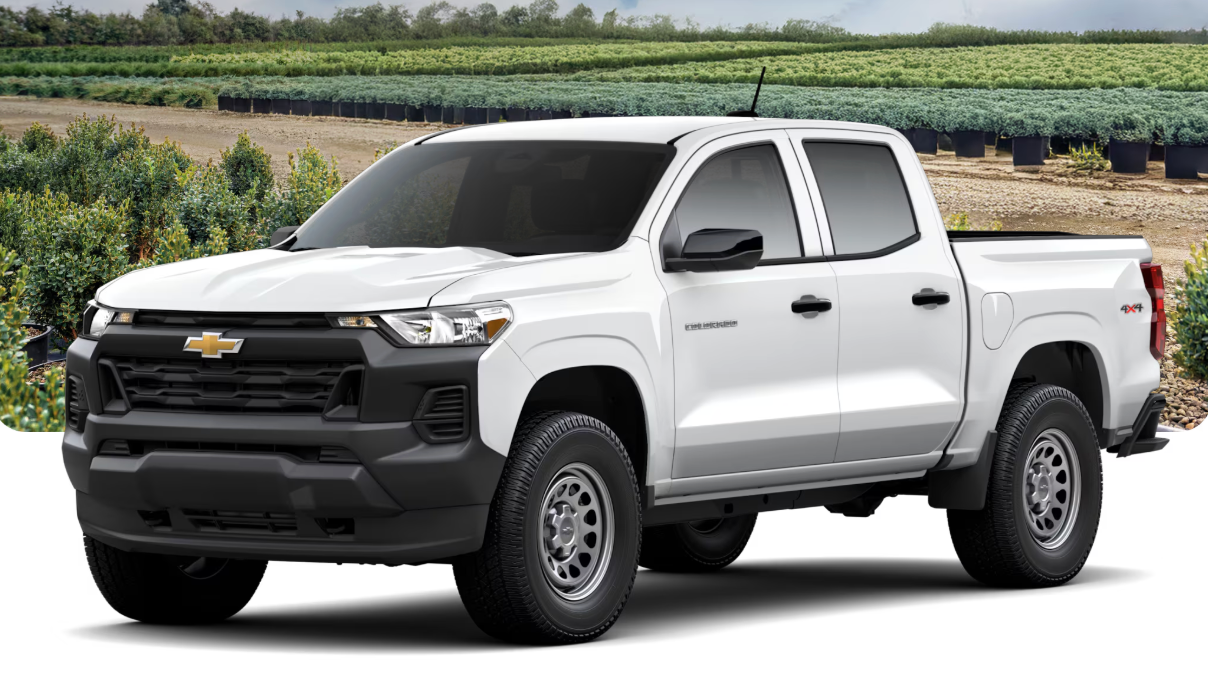




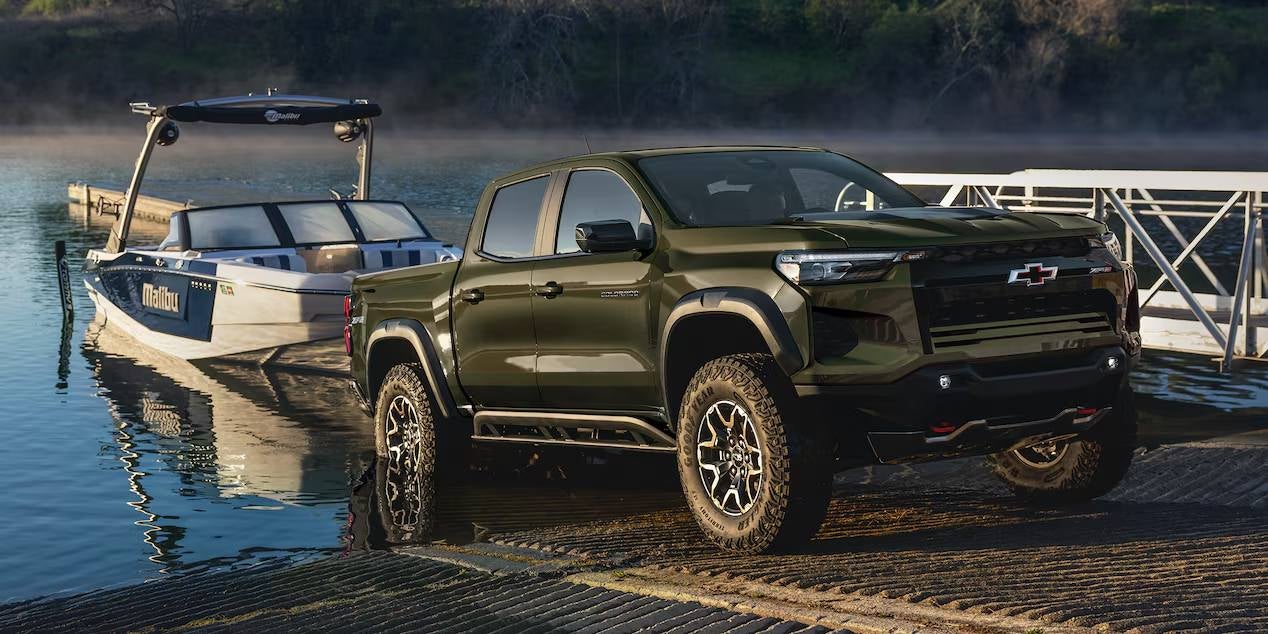
Plenty of Gulf Coast boaters ask us the same thing: can a Chevy Colorado tow a boat in the 20- to 24-foot center console range? The honest answer hinges on the truck and the loaded trailer, since the boat's length alone doesn't settle it. The Chevy Colorado towing capacity tops out at 7,700 lbs. on eligible 2026 configurations, and many center consoles sit right near that number.
Here at Turan-Foley Chevrolet in Gulfport, we help boat owners run these numbers every week. You can browse new Colorado trucks as you read, then use the steps below to see where your boat lands.
Can a Chevy Colorado Tow a 20- to 24-Foot Center Console? The Short Answer
It depends on the boat and the truck. A properly equipped Colorado can handle some center consoles in this size range, but not every one, and not every Colorado.
Once you add outboards, fuel, gear and a trailer, many 20- to 24-foot center consoles will land at or near the Colorado's limit. Some will exceed it. A lighter boat and trailer may fit comfortably, while a heavier boat of the same length may call for a more capable truck.
What decides it is the fully loaded boat-and-trailer weight and the limits of the specific truck. Trailering technology makes hookup and towing easier, yet no certified weight limit goes up because of it.
Chevy Colorado Towing Capacity: What the 7,700-Lb. Maximum Really Means
If you're asking how much a Chevy Colorado can tow, 7,700 lbs. is the number you'll see. It's the max available towing for 2026, and it applies only to eligible configurations. Treat it as a ceiling that some trucks reach and others don't.
The engine and drivetrain shape the rating, and so does the factory trailering equipment. A higher trim or extra horsepower won't necessarily get you a higher tow rating. The 2.7L TurboMax® makes 310 horsepower and 430 lb.-ft. of torque, yet the ratings below still vary.
That 7,700-lb. maximum requires the Advanced Trailering Package, sometimes called simply the Trailering Package, so check the window sticker or equipment list to confirm your truck has it.
Max Available Towing vs. Your Truck's Actual Rating
Max available towing describes a qualifying truck equipped to Chevrolet's requirements. Your truck has to match those requirements before that number applies. The table shows why: the ZR2 carries a 6,000-lb. rating, lower than the 7,700-lb. maximum, even with the same engine.
Here's how that plays out by trim. The Advanced Trailering Package is optional on the WT, Custom and LT and standard on the Trail Boss and Z71, so all five can reach the 7,700-lb. rating when equipped. The ZR2 is the exception at 6,000 lbs.
Ratings are comparison figures. The max trailer rating assumes base curb weight plus 150 lbs. each for the driver and a front passenger. Extra passengers, equipment, and cargo reduce it. A receiver hitch or aftermarket gear won't raise the manufacturer's rating either.
Where to Confirm the Tow Rating on a Specific Colorado
Start with the Trailering section of the Owner's Manual and the ratings Chevrolet publishes for your exact configuration. For a Colorado, the manual is the place to find the trailer rating.
Ratings vary by model year, engine, drivetrain, and equipment, so a Colorado from one year can't stand in for another. Your VIN and the truck's equipment records show which trailering features were actually installed. Our sales team can walk through that paperwork with you, so contact us before you commit to a truck.
Chevrolet says the sure way to check is to weigh the vehicle and trailer fully loaded for the trip.
How to Calculate Your Loaded Boat Weight
Base your decision on the complete, ready-to-travel combination rather than the hull weight in a brochure. Build an estimate from documented component weights, then confirm it on a scale when you can.
A few terms help:
Max towing is the heaviest trailer a properly equipped truck is rated to pull.
Payload covers whatever the truck carries: people, cargo, and tongue weight.
GVWR is the most the loaded truck itself can weigh.
GCWR is the maximum weight of the loaded vehicle and loaded trailer combined, including driver, passengers, fuel, optional equipment, and cargo in both.
Gross trailer weight is the weight of the loaded trailer.
Tongue weight is the downward force the trailer puts on the hitch.
The combination must stay within GCWR, GVWR, RGAWR, and the trailer weight rating, all at once.
Dry Weight vs. Actual Tow Weight
Dry weight is a starting point. The manufacturer of the Sportsman Open 232 Center Console, a 23' 4" boat, lists an approximate dry weight of 3,950 lbs. and says that excludes engine weight, fuel, water, gear, and batteries. The model is offered with different engine packages. That's one boat, and it doesn't represent the whole 20- to 24-foot category.
Always confirm what a published weight includes before adding anything. Actual tow weight is the trailer plus everything aboard as you travel. Weigh it in the condition you normally haul it, especially if you're close to a limit.
What Adds Up: Trailer, Outboards, Fuel, Batteries, and Gear
Use this "tow weight calculator" checklist at the kitchen table:
Boat dry weight, from the manufacturer's spec sheet, noting what it excludes.
Trailer empty weight, from the trailer spec sheet or its label.
Outboard engine or engines, if not included in the boat's published weight.
Fuel carried during transport, not an assumed empty tank.
Batteries, anchors, electronics, and safety equipment.
Water in livewells or freshwater tanks.
Coolers, tackle, and other gear.
The example below uses made-up numbers for illustration only. Say a boat lists 3,950 lbs. dry. Add 600 lbs. for an outboard, 300 lbs. for fuel, 100 lbs. for batteries, 300 lbs. for gear, and 1,500 lbs. for the trailer. That's an estimated 6,750 lbs. tow weight.
Compare that to the truck's rating. Against a 7,700-lb. rating, it leaves some room. Against the ZR2's 6,000-lb. rating, it's over the limit. These figures are not real weights for any specific boat or trailer.
How Passengers and Cargo in the Truck Reduce Tow Capacity
Trailer weight covers just part of the picture. Passengers, bed cargo, accessories, and tongue weight all use the truck's payload. They also eat into the GCWR allowance, which can reduce how much loaded trailer the combination can handle.
As a general guideline, tongue weight runs about 10 to 15 percent of trailer weight. In our illustrative 6,750-lb. example, that's roughly 675 to 1,013 lbs. landing on the truck's payload before anyone climbs in. For perspective, a 2026 Colorado WT 2WD carries up to 1,710 lbs. of payload, so a heavy tongue load could use more than half of it, leaving less room for passengers, coolers and gear in the cab and bed. Confirm the right tongue-weight range in the Owner's Manual and with the trailer manufacturer.
Why Two 20- to 24-Foot Center Consoles Can Have Very Different Towing Needs
Length tells you little. Hull construction and beam can produce very different weights in the same length range, and so can installed equipment. Engine setup is a big swing factor. Yamaha's 22-foot 222 FSH Sport uses a twin-engine setup, which shows how powertrains vary within this category.
Fuel capacity changes travel weight without changing dimensions. The trailer matters too, since its material and brakes affect weight and towing requirements, as does the axle configuration. Permanent accessories and routinely carried gear add up as well.
That's why we compare complete boat-and-trailer packages one at a time. A Colorado that suits one center console tells you nothing about another of equal length.
Trailering Features That Help Gulf Coast Boat Owners
Available trailering equipment supports hookup, pre-departure checks, and vehicle control, though availability depends on equipment, trim, and package. None of it raises a weight rating.
Gulf Coast use adds its own wrinkles. Wet, sandy launches and saltwater exposure are hard on brakes and bearings, and humidity wears on the lights. Rinse the trailer after saltwater trips and check brakes and bearings regularly. Our service department can inspect your hitch and trailer connections.
Trailer brakes are required above 1,500 lbs. of trailer weight on this model, and requirements vary by state. Secure your cargo and distribute trailer weight properly for stable towing. Watch for these red flags:
Trailer sag.
Rear squat on the truck.
Sway.
Poor braking.
Tow/Haul Mode and the Trailering App
Tow/Haul mode is available and optimizes performance when towing or hauling a heavy load. It adjusts the automatic transmission's shift schedule to reduce gear hunting. It doesn't authorize exceeding any rating.
The Trailering App is also available, and functions vary by equipment and trim. Depending on equipment, it supports trailer profiles, route planning, pre-departure checklists, and trailer tire-pressure monitoring. Its boat tab offers boat-related checklists and launch tutorials. Use it alongside a physical walk-around of the coupler, chains, lights, tires, and brakes.
Hitch Guidance With Hitch View
Hitch Guidance is available and shows a guiding line on the Rear Vision Camera screen that moves as you steer. That helps you line up the truck with the coupler while backing up.
Hitch View gives you a close-up, top-down look at the hitch. Some camera views require an available accessory camera and installation, and may not suit all trailers. Chevrolet lists Hitch View as standard on Colorado. Whatever the screen shows, physically confirm coupler engagement, locking hardware, chains, and electrical connections before you leave.
Choosing the Right Colorado Configuration for Boat Towing in Gulfport and Biloxi
If you want a midsize truck for towing a boat, work backward. Start with your loaded boat-and-trailer weight and expected truck payload, then pick a configuration that handles both. Compare verified ratings and ignore trim names. An off-road-oriented truck isn't automatically the strongest tow vehicle, as the ZR2's 6,000-lb. rating shows.
Four-wheel drive can help with traction on wet ramps around Biloxi and the Mississippi Gulf Coast, though the tow rating stays where it is. Confirm factory-trailering equipment and trailer-brake compatibility, since boat trailers may use different brake systems.
Leave headroom. Staying below rated limits with a margin beats living at the limit, because supplies and passengers change from trip to trip. If your loaded combination exceeds a Colorado limit, you need a more capable truck, and accessories won't close the gap.
Shopping used? Check the exact model year, engine, drivetrain, and installed equipment, since earlier generations differ. You can search used trucks, schedule a test drive, or look at financing options. A test drive shows visibility and comfort, but an unloaded drive doesn't prove towing suitability.
Shop Colorado Trucks at Turan-Foley Chevrolet and Confirm Your Tow Rating
Before you buy, know your numbers. The Chevy Colorado towing capacity that matters is the one for the exact truck you're considering, checked against its Owner's Manual and Chevrolet's published ratings for that configuration. This guide is informational and not a safety guarantee.
Bring This to the Dealership
Boat make and model.
Motor.
Trailer spec sheet.
Typical load.
Next Steps
Shop new Colorado trucks at Turan-Foley Chevrolet, then call our sales team at 228-604-8836 or use our online contact form, and our advisors will help confirm the exact truck's tow rating before you commit. You'll find us at 11123 Hwy 49 N in Gulfport. We're open Monday through Friday from 8 a.m. to 7 p.m. and Saturday from 8 a.m. to 6 p.m. For hitch and trailer inspections, call our service department at 228-206-0327.