



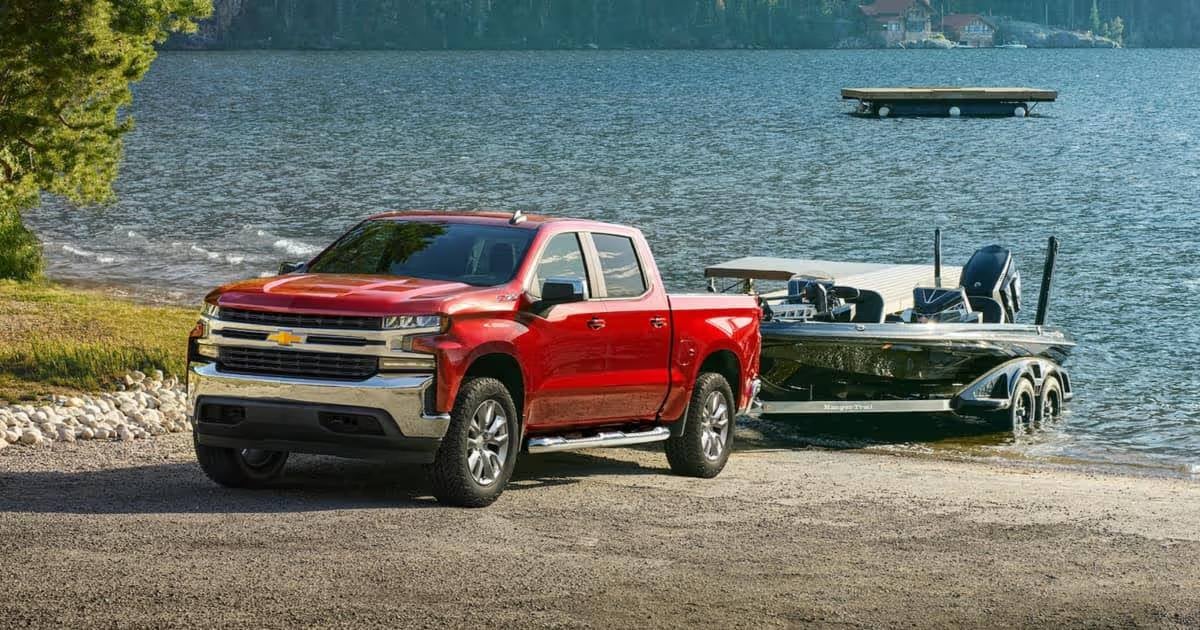
Plenty of boaters assume a big tow rating settles the drivetrain question. It doesn't. When you're deciding between a 2WD vs 4WD truck for boat ramps, what counts is getting a loaded trailer back up a wet incline. At Turan-Foley Chevrolet in Gulfport, we talk with boaters about this often, and the answer depends on your ramp, your boat and your tires.
2WD vs. 4WD Truck for Boat Ramps: The Short Answer
A properly equipped 2WD truck can tow a boat on normal roads with no trouble. It can also launch and retrieve on many firm, well-maintained, paved ramps with manageable slopes. For plenty of buyers, 2WD is the right call.
4WD adds traction when the rear tires can't find enough grip. That matters most on wet, algae-covered, or steep ramps, and with heavier boats. It improves your chances of a controlled retrieval, but it can't guarantee one.
Pick a truck for the toughest ramp conditions you reasonably expect, because a dry day at your usual ramp tells you little. Towing capacity is one question and ramp traction is another. The truck needs a rating that covers the whole load, and then it has to keep its grip while pulling that load uphill.
Why Tow Rating Alone Doesn't Predict Ramp Performance
A tow rating describes towing capability under specified conditions. It doesn't tell you how a truck will pull a boat off wet concrete. Ramp slope, surface condition, and tire grip all play a part, and so does how smoothly you apply power.
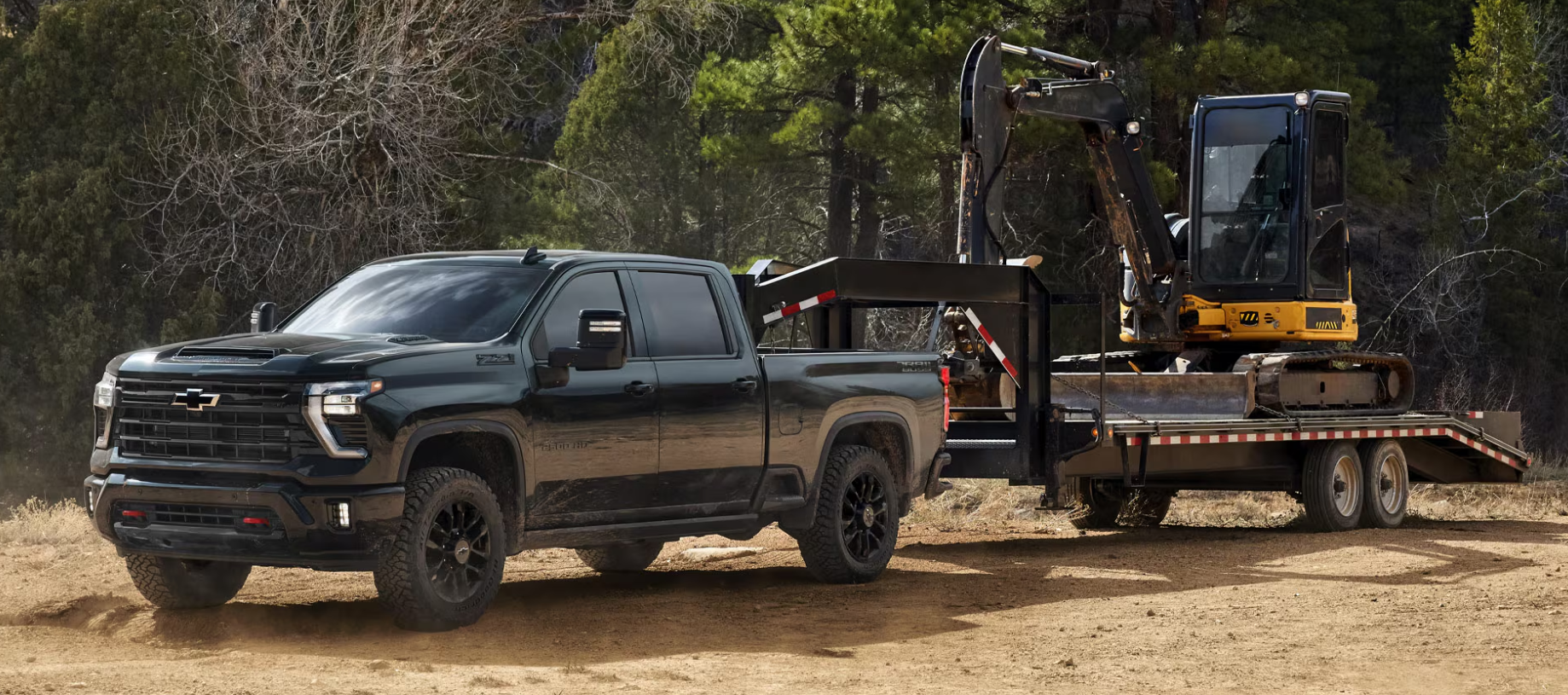
Add up the loaded boat and trailer, including fuel, gear, and supplies. Then compare that to the truck's payload, hitch limits, and combined-weight ratings. A higher-capacity truck isn't automatically the better ramp vehicle if its driven tires have poor traction.
Rear-Wheel Traction and Tongue Weight
In a 2WD pickup, the rear tires must pull the truck and trailer uphill. Their grip depends partly on how much weight presses them onto the surface. Tongue weight is the downward force the trailer tongue puts on the hitch, and it adds load over the rear axle.
That helps, but only to a point. A trailer on a slick incline can still overpower rear tires. For conventional trailers, Chevrolet's general recommendation is 10% to 15% of loaded trailer weight. Boat trailers can fall outside that range, so follow your trailer owner's manual. Loads placed too far forward or back can cause sway.
Don't shift your boat or trailer load just to squeeze out more rear grip. Extra bed weight won't replace good tires or a sound truck-and-trailer match, and any ballast counts toward your load limits.
Tires, Locking Differentials and Other Traction Factors
Grip comes from tread, rubber compound, tire condition, and inflation pressure. A tire that looks aggressive isn't necessarily best on wet concrete.
A locking differential lets both rear wheels receive power when one is slipping. Chevrolet offers an available Automatic Locking Rear Differential on Colorado and Silverado 1500. It sends maximum drive power to the wheel with grip in low-speed situations when rear-wheel slippage occurs. It doesn't turn 2WD into 4WD, though, because the front wheels still can't push.
Traction control helps manage wheelspin, but check your owner's manual for how it works with differential features and drive modes. Gentle throttle matters too. Extra power does nothing when the tires are already spinning.
When a 2WD Silverado or Colorado Makes Sense
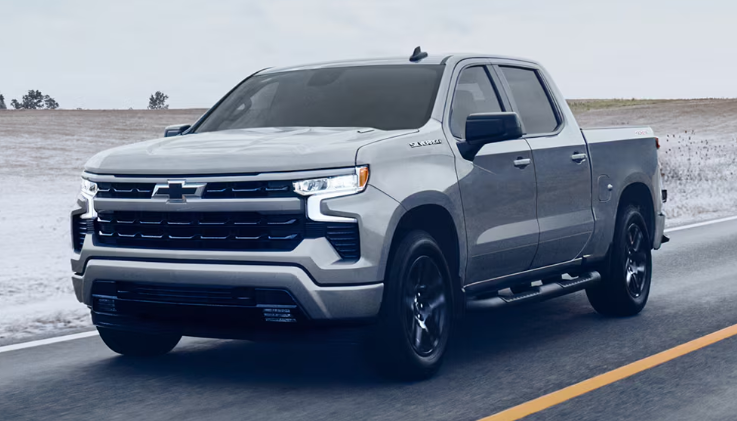
A 2WD Silverado 1500 or Colorado is a practical choice if you mostly use paved, maintained ramps with predictable traction. Good tires, the right rear-axle equipment, and careful driving can make 2WD plenty capable without the added cost and mechanical complexity of 4WD.
Ask how often you launch, whether your favorite ramps stay usable at different water levels, and whether you have reliable alternatives. A ramp that worked last month doesn't guarantee grip after rain, sediment buildup, or a change in water level.
For towing, a 2026 Silverado 1500 Double Cab with a standard bed and 2WD is rated for up to 9,300 lbs. with the TurboMax or Duramax 3.0L, and up to 9,700 lbs. with the 5.3L V8. A 2WD Colorado tows up to 7,700 lbs. with the Advanced Trailering Package, or 3,500 lbs. without it. Both are more than enough for most center consoles and bay boats. On the ramp, though, traction equipment matters more:
These figures apply to the configurations named, so confirm the exact truck's ratings on its driver-door Trailering Information Label.
The Colorado is offered in 2WD on the WT, Custom and LT trims, all of which come with all-season tires. That's worth weighing for ramp use, since tire choice affects grip on wet concrete as much as the drivetrain does.
When Gulf Coast Boaters May Appreciate a 4WD Truck for Boat Towing
A 4WD truck for boat towing makes the most sense when you keep running into uncertain traction. Owning a boat alone doesn't justify it. If you use several ramps or launch in changing weather and water, those extra driven wheels may be worth more to you than to someone using one well-kept facility.
Think of 4WD as added flexibility. It won't make an unsafe ramp safe. Where fitted, low range, called 4-Lo, uses the transfer case to gear the truck down for slow, controlled movement under load. The transfer case is the gearbox that splits power between the axles and offers those ranges. Low range doesn't create tire grip or raise your published towing limits.
Part-time 4WD systems can bind on high-traction pavement, so use the right mode for the surface. If you'd like to feel the difference, schedule a test drive and ask us about the available systems.
Wet, Algae-Covered, Sandy and Steep Ramps
Water, algae, and loose sediment can reduce grip so much that a truck able to tow the load on the road struggles during retrieval. Steeper ramps raise the pulling force needed, which exposes traction limits. Power to all four wheels helps when the front tires hold grip that the rears lack.
Chevrolet's boat-launch guidance says to select 4WD High or Automatic 4WD if equipped. It also says not to back onto a launch if you're unsure the vehicle can maintain traction. Ramps can be especially slippery at low tide, when a section that was submerged at high tide is exposed.
Know the limits. 4WD helps going forward, and it does nothing extra for braking or steering. It also doesn't let a truck exceed its tow rating. If the surface looks unsafe, wait or use another ramp.
Launch Scenarios Near Gulfport, Biloxi and Nearby Coastal Ramps
Boaters we talk to in Gulfport launch from a mix of places. Within an hour, Biloxi public launches include Hiller Park off Pass Road, the Kuhn Street ramp at U.S. Highway 90, and the Forrest Avenue and Lee Street ramps on the Back Bay of Biloxi. Others include Parkers Creek, Popp's Ferry Causeway Park on the Tchoutacabouffa River, and the Small Craft Harbor public ramp.
We're not describing surface conditions at any of them, and you shouldn't assume them either. Anywhere on the Mississippi Gulf Coast you might run into tides, algae, sand, or summer storms. Check weather and tides before leaving home. On arrival, look for slime, sand, damaged pavement, and whether the usable ramp is too short. Base your drivetrain choice on what you actually see.
How to Improve Ramp Traction in a 2WD Truck
If you're staying with a 2WD truck for boat ramps, you have real options.
Tires: Keep good tread and the manufacturer's recommended pressure, including on the trailer. Don't assume lowering pressure is appropriate for a loaded road truck.
Differential: Ask about the available Automatic Locking Rear Differential.
Loading: Follow the trailer manual for tongue weight. Secure and count any ballast against payload and axle limits.
Driving: Use smooth, progressive throttle. Stop repeated wheelspin instead of digging in.
Ramp Technique
Technique matters just as much. Chock the wheels and set the parking brake per the manufacturer's procedure. Back down slowly and avoid driving into deep water. If your truck has 4WD, engage 4WD or 4-Lo before the wheels slip.
Chevrolet's launch procedure has passengers exit before you back onto the slope, with the windows lowered. On a slippery surface, the driver stays in the vehicle with the brake applied. Keep people out of the trailer's path, because parts of it may be underwater and unseen.
For retrieval, Chevrolet's sequence is to hold the brake, start the engine, shift into gear, release the parking brake, and ease off the brake. Drive slowly until the tires clear the chocks, stop while a helper removes them, then pull the trailer slowly from the water. Have a recovery plan, and treat traction aids as limited measures.
Saltwater Maintenance
Saltwater and brackish water are hard on trucks. Rinse the underbody after each trip, and have brakes and bearings checked. Our service department can inspect tires and drivetrain parts, and you can use the service scheduler to book a visit.
Choosing the Best Truck for Boat Ramps on the Mississippi Gulf Coast
The best truck for boat ramps on the Mississippi Gulf Coast starts with the loaded boat-and-trailer weight. Then verify towing capacity, payload, hitch ratings, and axle limits for the exact truck. Compare tires, differential equipment, and available 4WD modes along with the badge. Moving up to a larger truck won't automatically fix a traction problem, and a smaller one can be exactly right.
Use this checklist to focus your decision:
Boat weight: Is the loaded boat and trailer well within the truck's ratings?
Ramp type: Do you expect steep, loose, or slick ramps, or mostly paved and maintained ones?
Launch frequency: Do you use one familiar ramp or several in changing conditions?
Saltwater exposure: Are you ready for regular rinsing and corrosion care?
Cost of ownership deserves a candid look. 4WD usually carries a higher purchase premium and can affect fuel economy. It also adds transfer case and front axle maintenance. Both 2WD and 4WD need rinsing and corrosion care after saltwater use. Compare the actual configurations rather than assuming every 2WD truck has the same advantage. If you're budgeting, explore used trucks or financing options.
Compare 2WD and 4WD Chevy Trucks at Turan-Foley Chevrolet
The 2WD vs 4WD truck for boat ramps decision gets easier with the real truck in front of you. Bring your boat and trailer's loaded weight, expected tongue weight, passenger count, and typical cargo. Tell us which ramps you use, and we'll go through Silverado 1500 and Colorado configurations, including differential features, trailering equipment, and low-range 4WD. We'll also tell you honestly when 2WD trucks fit best.
Talk With Our Sales Team
Call our sales team at 228-604-8836 or use our contact form, and bring your boat and trailer details so we can match the right drivetrain to your favorite ramps. You'll find us at 11123 Hwy 49 N in Gulfport.